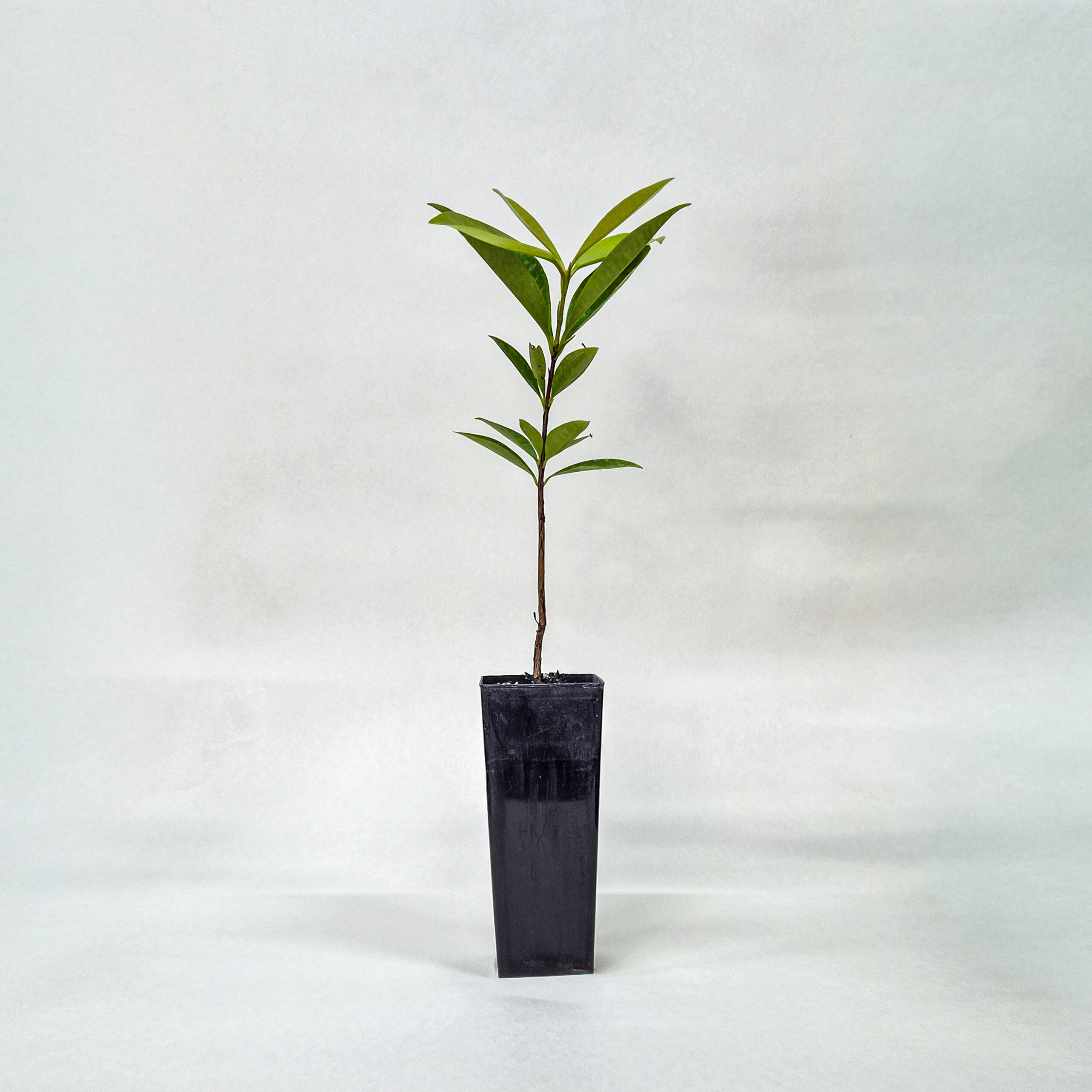
The Yellow Grumichama Plant stands out for its creamy-yellow fruit, striking foliage, and rarity. In fact, botanists call it Eugenia brasiliensis. Additionally, it goes by Yellow Grumichama, White Grumichama, White-fleshed Grumichama, Grumixama, Brazil Cherry, and Brazilian Cherry. While most people grow the dark-fruited relative, collectors and home orchard enthusiasts seek out the yellow variety for its distinctiveness.
Why Choose the Yellow Grumichama Plant?
The Yellow Grumichama Plant grows glossy evergreen foliage and fragrant white flowers. Furthermore, it produces pale-yellow fruit with a sweet, mildly aromatic flavour. People often eat the fruit fresh from the tree; however, it also works well in jams, jellies, sauces, desserts, juices, and summer drinks. Moreover, its handsome shape and lush foliage make it valuable as both an ornamental specimen and an edible landscape tree.
This species comes from the Atlantic Forest of Brazil and has quietly grown in cultivation for generations. However, you rarely find it outside specialist collections. As a result, its scarcity, attractive fruit colour, and reliable productivity attract collectors of rare fruit trees.
Growing the Yellow Grumichama Plant
Grow the Yellow Grumichama Plant in warm, frost-free climates with well-drained, fertile soil and regular moisture. As the tree matures, it becomes more resilient. You can also prune it to keep it compact or shape it into an attractive feature plant. Once established, the tree rewards you with fruit that is hard to find commercially.
If you enjoy unusual edible plants, grow this species alongside
Jaboticaba or
Brazilian Cherry. By doing so, you create a collection of remarkable South American fruit trees. Together, they offer beauty and diversity in the home garden.
A Rare Addition Worth Growing
Grow the Yellow Grumichama Plant for its delicious fruit, ornamental beauty, or collectability. Its elegant evergreen foliage, fragrant blossoms, and unusual yellow fruit make it a memorable addition to food forests and subtropical gardens. In addition, it stands out in rare fruit collections. Finally, gardeners who want a tree with visual appeal and rewarding harvests will find this species impressive year after year.